
Start creating communications that stir up personal pain for employees and start weaning off of messages that explain why non-compliant behavior is “bad for the company.”

Whenever you use humor to convey your compliance messages, make sure that humor is also combined with substance and an actionable route to a positive outcome.
If you want your employees to be as familiar with your compliance policies and the law as they are with the Quarter Pounder with Cheese, communicate with them the way McDonald’s communicates to us. Put low-bandwidth, non-intrusive messages in front of them through as many channels as you can on an ongoing basis. This actually works.
Take one large training module you are currently assigning out to a broad audience and place a short self-assessment questionnaire in front of it. Have employees answer a small set of questions about their day-to-day work that is designed to identify risk.
Allow those at low risk to qualify out of the course, and start providing that audience with small bursts of information aimed more at awareness than proficiency.
Communicate compliance with as much clarity and frequency as you can, but above all else be consistent. If you say that a behavior will not be tolerated, be sure it is not tolerated. It would be better to under-communicate than to communicate promises you cannot keep.
Just understanding the new vocabulary of compliance communications can go a long way toward shifting your current “compliance training and communications” framework to a much more effective approach.
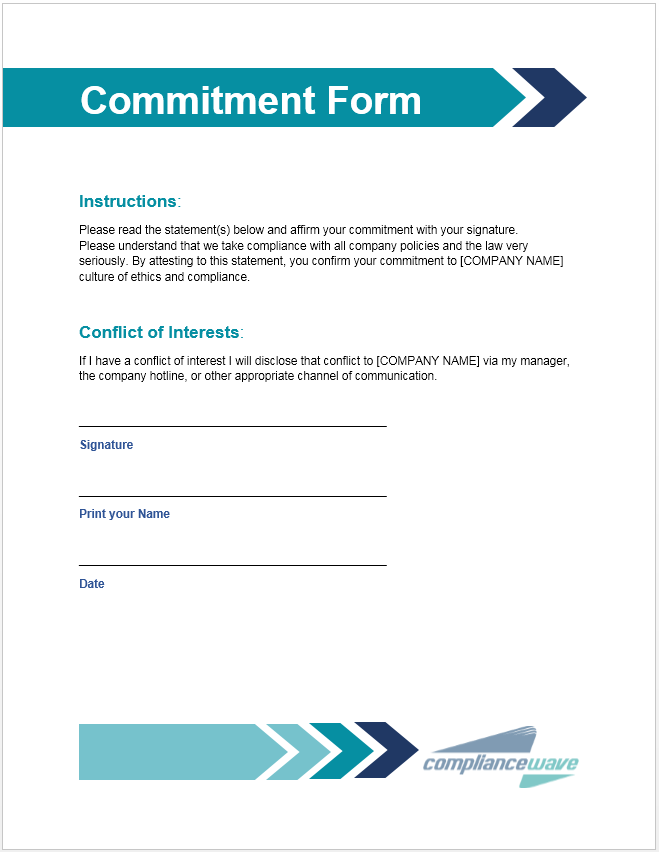
Bring your communications a step forward. By introducing Commitment Statements in the physical realm – ink or electronic signatures that require an employee’s conscious participation – you assemble building blocks for behavior change. A step from passive to active compliance.

.png?width=600&name=Healthcare%20CTA%20Graphic%20(11).png)
Privacy Statement | Member Bill of Rights | Compliance Communications Glossary
Copyright ©2022 Diligent Coproration